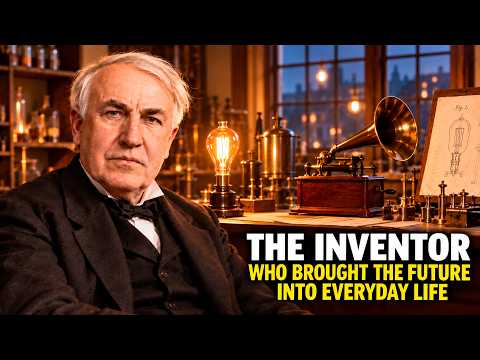
Thomas Alva Edison is often remembered as the "Wizard of Menlo Park." His relentless pursuit of progress gifted the world the incandescent lightbulb, the phonograph, and the motion picture camera. However, his most significant contribution wasn't just a single device; it was the creation of the modern industrial research laboratory. This systemic approach to innovation laid the groundwork for how we design, test, and engineer the world today.
While Edison relied on thousands of physical prototypes and manual iterations to see his visions come to life, today’s creators have a distinct advantage. Modern engineers and designers use sophisticated tools like Autodesk Inventor to simulate, visualize, and refine their ideas in a digital environment before a single physical part is ever manufactured. This software represents the digital evolution of Edison’s experimental spirit, allowing for a level of precision that the 19th century could only dream of.
From Physical Workshops to Digital Design
Edison famously said, "I have not failed. I've just found 10,000 ways that won't work." In his era, every failure meant lost time, expensive materials, and physical labor. Today, the design process is vastly more efficient. By utilizing Autodesk Inventor, professional engineers can conduct stress tests, thermal analysis, and motion simulations to identify potential failures in seconds rather than months. This digital prototyping environment captures the iterative essence of Edison’s laboratory but accelerates it to the speed of modern industry.
Building the Infrastructure of Tomorrow
Edison’s work with the electrical grid transformed society, effectively turning night into day and powering the industrial revolution. Similarly, the infrastructure of our modern world—from complex manufacturing machinery to sustainable energy systems—is now built using advanced 3D modeling. Whether you are designing a complex mechanical assembly or a simple part, Autodesk Inventor provides the documentation and precision necessary to scale innovation to a global level.
The legacy of Thomas Edison continues to inspire. While the tools have changed from glass tubes and carbon filaments to high-performance CAD software, the fundamental goal remains the same: to solve problems and improve human life. By combining the persistent mindset of history's greatest inventor with modern technology, we can continue to build a brighter, more efficient future.


