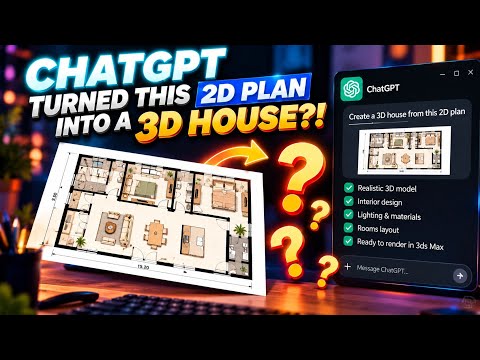
The world of architectural visualization is evolving at a breakneck pace. Traditionally, turning a 2D floor plan into a detailed 3D model required hours of manual extruding, snapping, and measuring. However, the integration of artificial intelligence is turning the industry on its head. Imagine a workflow where a simple AI prompt can help transform a flat image into a fully realized structure.
The Synergy of AI and 3D Modeling
One of the most exciting developments in the design industry is the use of ChatGPT to assist in the modeling process. By leveraging the power of AI-generated scripts and logic, designers can now automate the most tedious parts of the design process. When combined with a powerhouse software like Autodesk 3ds Max, the results are nothing short of transformative. This synergy allows artists to focus on the creative aspects of a project—like lighting and texturing—rather than the repetitive technical hurdles of basic geometry creation.
How It Works: From Blueprint to Render
The process begins with a standard 2D plan. Instead of manually tracing every wall and window, ChatGPT can help generate the necessary scripts or organizational logic to interpret architectural data. This data is then fed into Autodesk 3ds Max, where the software’s robust toolkit takes over to generate high-fidelity geometry. This isn't just about saving time; it’s about precision and the ability to explore multiple design iterations faster than ever before.
Why This Matters for 3D Artists
For professionals, staying ahead of the curve means embracing these new tools. Using AI as a "co-pilot" within Autodesk 3ds Max allows for a more fluid and intuitive design experience. Whether you are building residential homes or complex commercial structures, the ability to rapidly prototype 3D environments from 2D inputs is a massive competitive advantage. It bridges the gap between a conceptual sketch and a professional-grade render.
Conclusion
The fusion of AI and traditional 3D software is just beginning. By learning how to bridge the gap between ChatGPT and your modeling suite, you unlock a future of limitless productivity. If you're ready to revolutionize your workflow and see what happens when AI meets architectural expertise, now is the time to start experimenting with these cutting-edge techniques.


