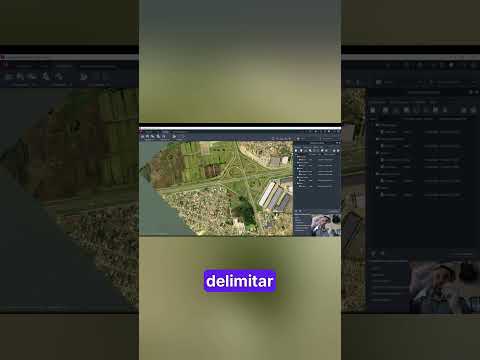
The world of civil engineering is undergoing a massive digital transformation, and at the center of this revolution is the integration of Artificial Intelligence (AI). For professionals looking to stay ahead of the curve, understanding how AI enhances Autodesk InfraWorks is no longer a luxury—it is a necessity. By merging generative design with BIM (Building Information Modeling) workflows, engineers can now automate complex tasks that previously took weeks to complete.
The Power of AI-Driven Automation
One of the most significant advantages of using AI within the Autodesk InfraWorks environment is the ability to process and analyze massive amounts of geospatial data instantly. AI algorithms can now assist in feature recognition from point clouds, automatically identifying assets like trees, light poles, and traffic signs. This level of automation allows designers to create highly accurate "digital twins" of existing conditions without the manual drudgery of traditional modeling.
Generative Design and Smarter Decision Making
Beyond simple automation, AI empowers engineers to explore "what if" scenarios through generative design. When planning a new highway or urban development, Autodesk InfraWorks can utilize AI to evaluate hundreds of design permutations based on specific constraints like terrain, environmental impact, and budgetary limits.
Instead of designing a single solution, the software provides the best possible iterations, allowing for data-driven decision-making. This ensures that projects are not only visually stunning but also optimized for drainage, traffic flow, and structural integrity before the first stone is even laid.
Efficiency and the Modern Engineer
The practical application of AI in infrastructure isn't about replacing the engineer; it’s about augmenting their capabilities. By offloading repetitive calculations and data processing to AI-enhanced tools, professionals can focus on high-level problem solving and creative design.
As we move toward a future of "smart cities," the integration of AI into our primary design tools will be the key to building more resilient and sustainable infrastructure. For those ready to master these tools, the jump in productivity is often immediate, leading to faster project approvals and more accurate cost estimations.
If you are ready to take your skills to the next level, now is the time to embrace the AI features that are reshaping the landscape of modern civil design.


