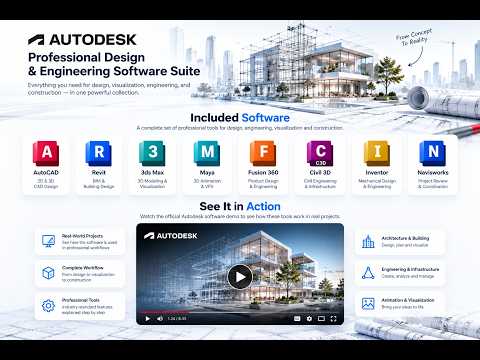
In the rapidly evolving world of professional design, engineering, and digital entertainment, one name stands above the rest: Autodesk. From the intricate blueprints of modern cities to the breathtaking visual effects in blockbuster movies, Autodesk software has become the essential backbone of creative and technical industries. Whether you are a student, an architect, or a digital artist, understanding the diverse range of tools available in this suite is the first step toward professional excellence.
AutoCAD: The Foundation of Precision
AutoCAD remains the most recognized application in the design world. It is the global industry standard for 2D and 3D CAD (Computer-Aided Design), offering unparalleled precision for architects, engineers, and construction professionals. By utilizing AutoCAD, users can create detailed floor plans, technical schematics, and intricate models that serve as the foundation for real-world structures. Its ability to automate drafting tasks and provide a standardized platform makes it a non-negotiable tool for anyone requiring technical accuracy.
Maya: Bringing Digital Worlds to Life
For those in the realm of 3D animation and game development, Maya is the ultimate powerhouse. This specialized Autodesk software is widely used to create high-quality 3D assets, realistic characters, and stunning visual effects. Its sophisticated toolset allows for complex character rigging, fluid simulations, and advanced rendering. If you have ever been captivated by the fluid movements of a video game protagonist or the realistic textures in a fantasy film, chances are Maya was the engine behind that creativity.
Revit: The Future of Building Information Modeling (BIM)
While AutoCAD focuses on lines and geometry, Revit is built for data and collaboration. Revit is specifically designed for Building Information Modeling (BIM), allowing architects and structural engineers to work within a single, unified digital model. The magic of Revit lies in its coordination; every change made to a window or a structural beam updates across the entire project automatically. This reduces costly errors and streamlines the entire construction process from the initial sketch to the final build.
Conclusion: Empowering Your Creative Journey
The suite of Autodesk software is vast and highly specialized to meet the demands of modern professionals. While some creators might only need the drafting power of AutoCAD, others may require the multidisciplinary coordination of Revit or the artistic freedom of Maya. By mastering these industry-leading tools, you aren't just learning a program—you are gaining a competitive edge in a global market that values innovation and technical proficiency.


