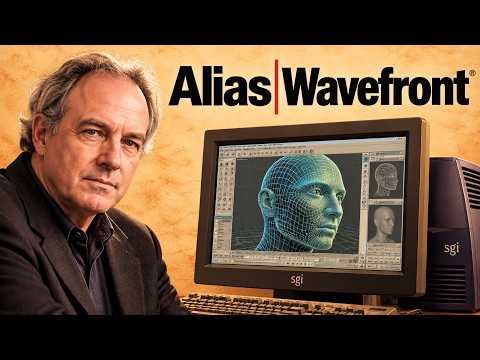
Before 3D animation became a dominant force in Hollywood blockbusters, digital artists operated in a landscape with limited tools and massive technical hurdles. Enter Alias|Wavefront, the visionary company behind the foundational technologies that forever changed computer graphics and visual effects.
The Early Days of Alias|Wavefront
Long before modern digital workflows existed, Alias|Wavefront set out to build tools that bridged the gap between complex mathematics and artistic intuition. By creating software capable of generating hyper-realistic 3D models and smooth animations, they provided filmmakers and designers with unprecedented creative freedom.
Winning Oscars and Revolutionizing CGI
As Hollywood realized the potential of computer-generated imagery, Alias|Wavefront became the gold standard for visual effects houses worldwide. Their groundbreaking software powered iconic film moments and earned prestigious Academy Awards for technical achievement. This era established 3D software not just as a niche technical experiment, but as an indispensable storytelling medium.
The Transition to Autodesk Alias
Recognizing the strategic importance of these pioneering design platforms, software giant Autodesk acquired Alias|Wavefront. This historic acquisition expanded the technology’s reach beyond entertainment into automotive and industrial design. Today, Autodesk Alias stands as a premier solution for industrial designers and surface modelers, enabling professionals to craft aesthetic, high-precision products with ease.
Through continuous innovation, Autodesk Alias has maintained its reputation for technical excellence, proving that the legacy of Alias|Wavefront lives on in modern design pipelines.
The Lasting Legacy of 3D Innovation
The evolution of 3D graphics—from early workstation software to the robust features in Autodesk Alias—highlights how far digital design has come. As technology continues to evolve, the spirit of innovation that started with Alias|Wavefront continues to inspire artists, engineers, and creators to push the boundaries of visual creation.


